
What Does “Lay the Draw” Mean?
On the Betfair Exchange, laying the draw means you’re betting that the match will not finish as a draw. You win the backer’s stake if the game does not end in a draw, and you lose your liability if it does.
The typical LTD trade is not “hold to the end”. Most LTD traders are looking for a goal and then exiting/hedging shortly after the market reacts.
Download the PDF guide
Prefer an offline copy? Download the printable PDF and keep it with your trading notes.
Why Lay the Draw Works (When It Works)
The draw price is highly sensitive to goals. If the match is 0–0, the draw price often shortens as time passes. When a goal is scored, the match becomes less likely to finish level (at least in the immediate market perception), so the draw price usually drifts quickly.
LTD attempts to capture that drift. But the market is not dumb—good LTD spots come from selecting matches with a higher likelihood of goals and a sensible game state for entry.
The LTD Trade Flow (Simple Version)
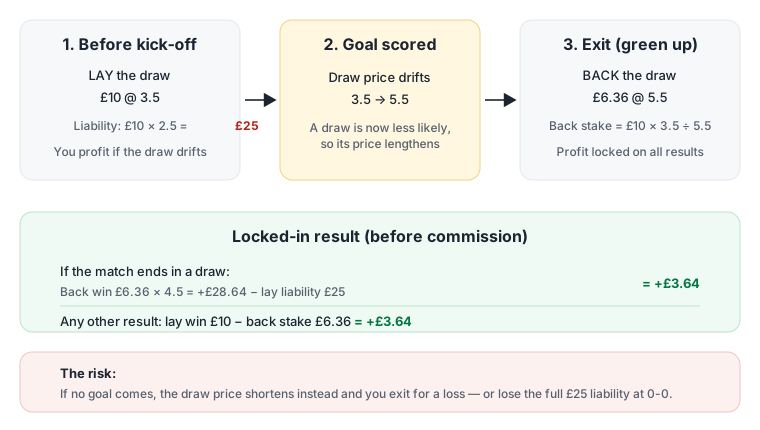
- Choose the match (goal expectation, team styles, context)
- Plan the entry (kick-off, after X minutes, or after a price condition)
- Lay the draw at your planned price
- Exit plan A: goal is scored → hedge/green up
- Exit plan B: no goal by a certain time → cut loss or reduce exposure
Match Selection: The Real Edge
The biggest difference between poor and decent LTD results is match selection. Laying the draw blindly across all matches is a common beginner mistake.
What LTD traders typically look for
- Two teams with a history of scoring (and conceding)
- Strong “need to win” incentives (league context, cup ties, etc.)
- Lower chance of a slow, cautious match
- Reasonable liquidity (avoid very obscure leagues early on)
Warning signs (often poor LTD candidates)
- Two defensive teams / low expected goals
- Matches where both sides benefit from a draw
- Very low liquidity (hard to exit at a fair price)
- Late entry with no clear plan
Entry Timing: When to Lay the Draw
There isn’t one “best” entry. Your entry should match your match read and risk tolerance.
Option 1: Early entry (kick-off to 15 mins)
Pros: more time for a goal, larger potential drift after a goal. Cons: you can sit in the trade longer; early red cards/goals can shift the plan.
Option 2: Wait for market confirmation (15–30 mins)
Pros: you’ve seen the pace of the match; less blind entry. Cons: draw price will likely have shortened, reducing potential upside.
Option 3: Price-based entry
Some traders only enter when the draw price reaches a level that suits the trade structure. This approach can help keep decisions consistent.
Exits and Hedging: How You Actually Bank LTD Profits
The trade is made on the exit. Many people do LTD correctly but then ruin results by exiting poorly or failing to hedge accurately.
After a goal: hedge/green up
If a goal is scored, the draw price will often drift quickly. You can then back the draw at a higher price to lock profit across outcomes (or reduce exposure). Use a hedge calculator so you don’t guess.
Use: Back/Lay Hedge Calculator and read how hedge stakes work.
No goal: set a time-based stop
LTD has a natural enemy: 0–0 time decay. If no goal happens, the draw price shortens and you are “down” on the position. Good LTD traders decide in advance when they will:
- Exit for a controlled loss
- Reduce exposure
- Let it run (higher risk)
A common beginner improvement is simply having a consistent “cut” rule rather than hoping for a late goal.
Risk: Liability and Why LTD Can Hurt
When you lay, you take on liability. LTD can look low-risk because “most matches aren’t draws”, but a draw still happens often enough to matter, and losing runs can be real.
Always calculate the liability before entering: Lay Liability Calculator.
EV Thinking: When LTD Is Value (and When It Isn’t)
LTD can be treated like a structured trade, but it still benefits from value thinking. If you routinely enter at poor prices (too short) or in low-goal matches, you’re fighting the maths.
Useful reading/tools: Implied probability, EV guide, EV Calculator.
Common LTD Mistakes
Laying every draw
LTD is not a blanket strategy. Match selection is the edge. Avoid matches where a draw suits both sides.
No exit plan
Entering without a time-based stop is the fastest way to turn a manageable trade into a big emotional decision.
Chasing after a goal
Entering late after the market has already moved often means you’re paying a bad price. Plan entries calmly.
Ignoring commission
Commission matters most when you’re taking smaller, frequent profits. Factor it into your expectations.
Related calculators
- Lay liability calculator — See exact exposure before laying the draw.
- Back/lay hedge calculator — Plan exits after the first goal.
- Expected value calculator — Check if the entry price is +EV.
- Dutching calculator — Split stakes across correct-score covers.
FAQs
Is Lay the Draw good for beginners?
It can be, if you keep stakes small, pick liquid matches, and use strict exits. The biggest beginner mistake is treating it as guaranteed profit.
When should I exit if it stays 0–0?
Many traders set a fixed minute to exit (for example 60’ or 70’) to avoid being trapped by late draw shortening. The exact rule depends on your risk tolerance—what matters is consistency.
Do I always hedge after a goal?
Many traders do, but not always. Some take partial profit, some green fully. Decide your approach before you enter, then use a calculator so the hedge stake is accurate.
What tools help the most?
Most LTD traders rely on the hedge calculator and lay liability calculator, plus EV thinking for price discipline.